
How can your company be more sustainable
General
Nowadays, if your company isn’t striving to be as sustainable as possible, there’s a good chance you’ll be in trouble quite soon. Consumers are demanding more sustainable companies, and more transparency to make sure the businesses they buy from are as sustainable as they claim.
The United Nations have set out the 17 sustainable development goals, which form the base for the 2030 Agenda for Sustainable Development. These goals were adopted by all the United Nations Member States in 2015, so that’s over five years ago now! Inside each of the 17 broader goals there are several targets which can be used to align your business practices with these fundamental Sustainable Development Goals. In total there are 169 targets, so there’s something that every business can do to more towards being more sustainable.
How can your company be more sustainable? Let’s look at a few ideas to boost your sustainability
Remote Work
Working from home is no stranger to the vast majority of us, after the global pandemic caused many countries to use lockdown and quarantine measures to control the spread of the COVID-19 virus. Although some of us are returning to offices, a lot of us are cracking the laptop open and working from home.
Not going to the office reduces traffic pollution (SDG 11 – Sustainable Cities and Communities) and you might even be able to get up a bit later. Make sure you have a comfy, clear workspace at home, though!
Public transport
We all know that public transport is more environmentally friendly than your private car. So, in the case that you do have to go to the office, try taking the bus, or the train.
Companies can incentivise this by offering season tickets to workers who have to commute, or setting up car pooling routes.

Sustainable products in offices
In offices there are loads of products that are consumed every day, almost without anyone realising. They can be anything from bottled water to toilet paper. However, there are lots of ways to reduce the impacts of these little office necessities, and that ties in nicely with SDG 12 – Ensure sustainable consumption and production patterns.
The rise of the ubiquitous coffee capsule might have made getting your morning caffeine dose easier, but it’s bad news for the planet. Using refillable capsules or a system without capsules is much more sustainable.
Paper, as we know, is the enemy of sustainability. Emails now come with dire warnings about what will happen to the planet if they are printed. Luckily, with cloud computing printing stuff out feels more Don Draper-esque than modern office. However, sourcing paper from sustainable or recycled sources can reduce the impact of those things you just need to see on paper. Paper can also be reused – more on that later.
Paper isn’t just for reading! The lavatory can be a black hole of paper consumption. Rolls of paper are used to dry hands, and all sorts of other things. Using recycled paper is a great way to reduce the impact of all the consumption, since the three seashells idea is still science fiction. Hand dryers can replace the huge rolls next to sinks, let’s face it, whenever you get there, there’s usually only one damp sheet left anyway.
Plant-based or vegan food
Eating and drinking in offices, or during office hours, is unavoidable and office canteens and cafeterias are a social hub, but they can be a sustainability hub too.
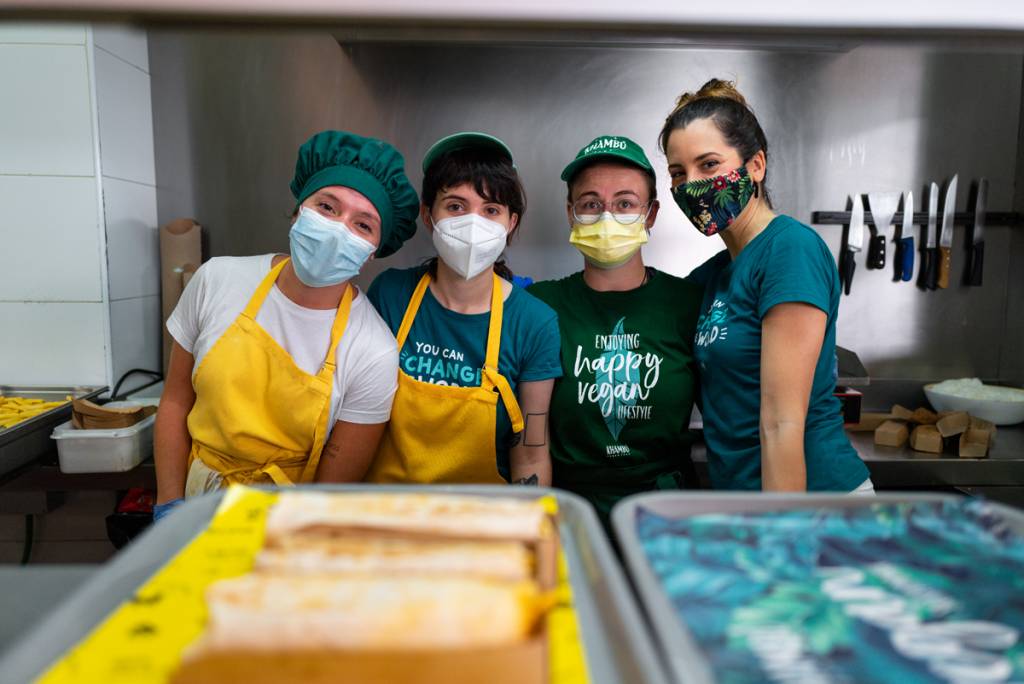
Single use plastics are a no-no, but there are plenty of alternatives available. Cutlery made of bamboo can replace plastic knives and forks and doesn’t need to be recycled or dumped in landfill. Environmentally friendly cleaning products can be used to keep everything spick and span. Switching to a plant-based menu is one of the best ways to become more sustainable, and there are so many options on the market nowadays that you’ll hardly even notice the change. Making sure there are ample recycling bins around for employees is a great way to promote recycling, and composting leftover food is a very easy green option.

Second hand office furniture
When kitting out your office, or finding new furniture, why not try second hand, recycled, or upcycled alternatives? You don’t have to have all your desks made out of pallets and people sitting on old beer crates, there are plenty of options to find second hand furniture either mixing and matching or by searching for other offices that are expanding, downsizing, moving or going remote. There is a host of websites offering top notch used office furniture at discounted prices, and there’s even a company that recycles tens of thousands of chopsticks to make brand new, recycled, office furniture.
Sustainable packaging
If your company is product-based, the way that your product is protected, packaged and transported is very important. Even if you are selling light bulbs that last forever, if they come wrapped in plastic, inside a plastic blister pack in a huge box with polystyrene packaging, you definitely lose some sustainability points.
Comapanies must ensure that their packaging is as sustainable as possible, in the event that packaging is essential. Recycled and recyclable materials are best, keeping plastics to one single type is also fundamental as mixing polymers can make recycling much more complex.
Using boxes that are the right size for products, rather than a generic huge one with a tiny product hidden somewhere inside. Protective padding can also be made of your own office paper; shredded and reused to pack delicate products.

Sustainable supply chain
Where each of the products that a business uses comes from is also important. Your own supply chain needs to be as sustainable, and transparent, as your own business. Making sure that a business uses supply chains that treat workers fairly, use sustainable company practices themselves, and are committed to their own sustainable goals is key. Your supply chain can include a whole range of SDGs such as 1 – No Poverty, 2 – Zero Hunger, 5 – Gender Equality, 8 – Decent work and Economic Growth, 9 – Industry, Innovation and Infrastructure, 12 – Responsible Consumption and Production or 17 – Partnerships for the Goals.
Energy efficient upgrades
Offices use a lot of energy. From lights, to air conditioning, to computer terminals – everything is powered by the miracle of electricity. Where that electricity comes from, however, is another story. Making sure that office power comes from as green a source as possible will limit the environmental impact.
Businesses can also change to LED lighting, low energy screens, and smart lighting and heating systems to reduce energy consumption and keep their impact as low as possible. SDG 7 deals with clean and affordable energy.
Green web hosting
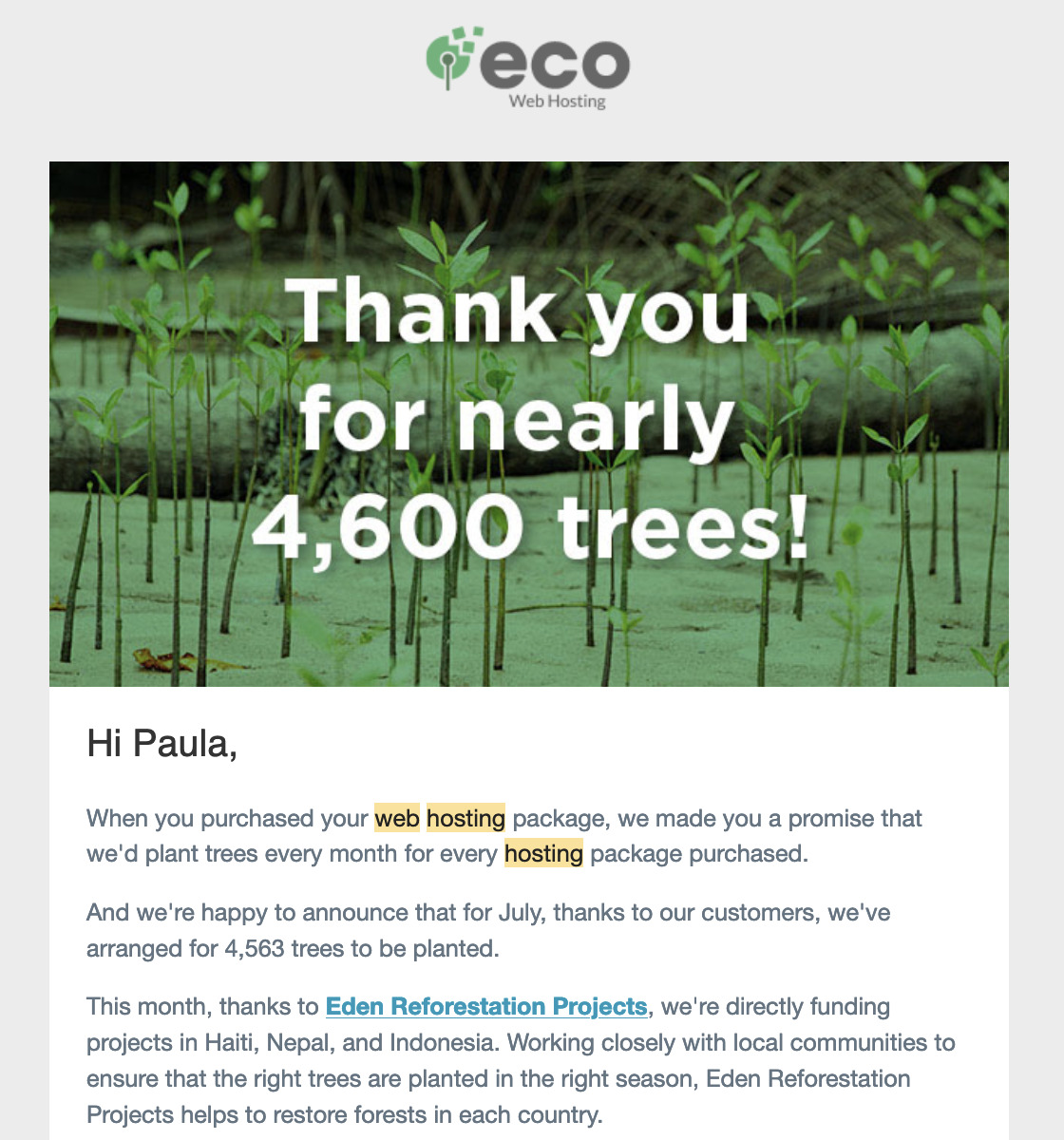
If your business isn’t online, it’s probably in trouble. If it has a website, and it should, you’ll need a hosting service. Green hosting means that you acquire your domain from a company that integrates sustainability into their business practises. A hosting company uses physical servers to host a domain, so green hosting companies use sustainable energy, low-consumption hardware, and often collaborate with carbon offsetting, too.
We’d like to give a shoutout here to our own provider: EcoWebHosting!
Do business with green businesses
A great way to do business sustainably is to work with companies that are sustainable. Given the choice, wouldn’t you rather work with someone who, like you, was trying to make their own business more sustainable? Forming partnerships to increase sustainability means companies can mutually benefit.
Buy carbon offsets
A simple way to boost the sustainability of a company is to buy carbon offsets. In the EU there are strict rules which cap the amount of carbon emissions a company can produce. Buying carbon offsets allows companies to offset some of their emissions. However, simply buying carbon offsets isn’t a solution; reducing carbon emissions is the key, and must be the overall goal in the long term.
Sustainable training for staff
The staff in a company need to know what’s going on, and want to feel included so training them is a great way to get more people on board with your mission to be more sustainable. Keeping everyone up to speed will also incentivise the workforce and can generate ideas and new ways to become even more sustainable.
Be accountable – have a sustainability team
Doing something right is always better than taking a wild stab at it and missing the mark. To keep on top of sustainability inside a company, it might be necessary to train, promote or hire someone, or a team of sustainability experts to keep track of progress. Claiming to be a sustainable company doesn’t necessarily make it so, and companies must be held accountable. A sustainability team will bring new ideas to the table and keep the company pointed towards the future – a sustainable future.
Recycle surplus electronics and furniture
Remember reading about buying second hand furniture for your office? Well when you upgrade, move, downsize, or start working remotely, you probably won’t need all your office furniture and electronics. Think about selling, recycling, or donating it. This keeps a more circular economy going and reduces waste.
Sustainability in your Strategy
Suddenly becoming a sustainable company is an impossible task. Going home on Friday night and clocking back into a sustainable company on Monday morning is unfeasible. Sustainability should be introduced bit by bit, and above all planned for.
Creating a strategy for sustainability is a great first step towards creating a more sustainable company. Rather than haphazardly deciding to replace all single-use water bottles in the next quarter, a relatively simple way to increase your company’s sustainability is to identify all the ways it is failing to be sustainable, and plan to fix them.
This might mean that you slowly phase out all the lightbulbs and replace them with LEDs, or perhaps change to a vegan menu, maybe you can change your web hosting service, or even start working from home one or two days a week.
Choose goals you can align with
The limit to what you can do to make your business more sustainable is basically your imagination. However, you need to make sure that you choose Sustainable Development Goals which your business can potentially align with. If your company is a web-based consultation service, it’s unlikely that you can align with SDG 14 Target 4 and reduce overfishing and illegal fishing practises. Instead, you can work to promote equality (SDG 5), foster education (SDG4) and work to keep your employees healthy (SDG 3).
Get certified
A great way to make your business more sustainable is to work towards a certification that makes sense for your company. There are loads to choose from – there are energy efficiency certificates, health and wellness certificates, or animal welfare certificates. Apart from large international corporations, there are probably more local institutions that you can work with. Working with these accreditors not only gives your business a boost in the eyes of consumers, but also gives your company a target to work towards and inspires and enthuses you and your colleagues.
Be sustainable, for real
On a final note, being sustainable shouldn’t be used as a marketing tool, or a sneaky way to snag more clients. Although it is admirable that your company is taking steps to a more sustainable future for everyone, greenwashing is not cool. We have all heard the stories of dubious supply chains, buying tonnes (literally) of carbon offsets while churning out clouds of polluting fog, or planting trees in one place and dumping toxic waste into the sea in another.
Greenwashing is not the answer. Sooner or later the public will find out, rules will tighten, and changes will have to be made. Wouldn’t it be better to be ahead of the curve – creating the business models of tomorrow, and protecting the planet at the same time?
Having trouble identifying your Sustainable Development Goals? We have experts to help you through it!