
Ten Tips for Non-Vegan Agencies Working with Vegan Clients
General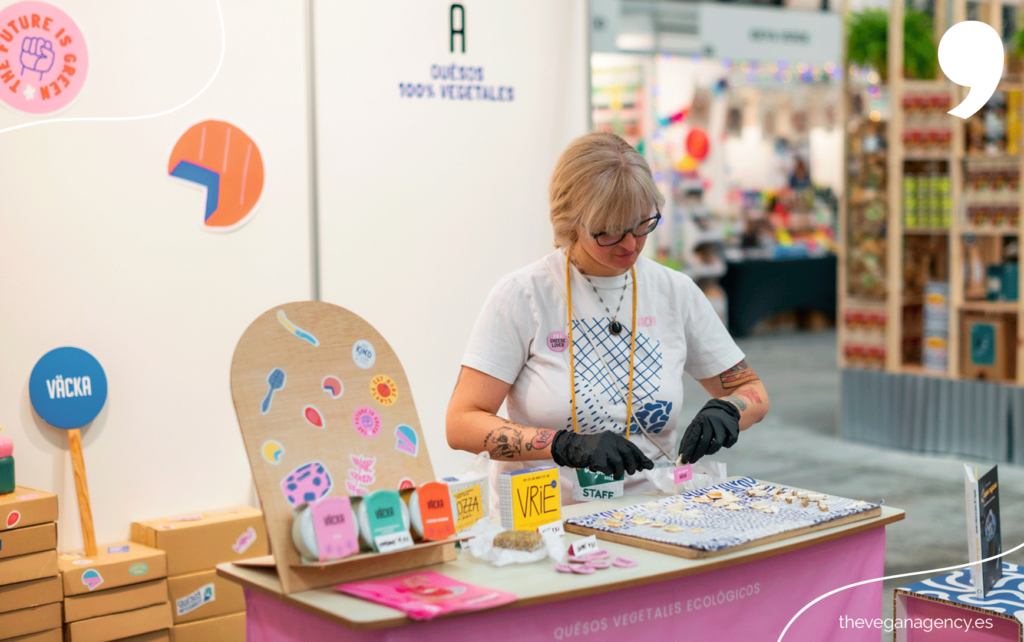
A while ago we posted some tips to help non-vegan agencies work with vegan brands. Here is a more detailed list, and one extra tip, for non-vegan agencies working with vegan clients and how to make the relationship as smooth as possible.

1. Get Educated on what being vegan really means
Vegan is a powerful word; it can inspire all sorts of emotions from fear and loathing to wonder and awe. That being said, it’s also often misunderstood, misinterpreted or misrepresented.
The Vegan Society defines veganism in the following way:
“Veganism is a philosophy and way of living which seeks to exclude—as far as is possible and practicable—all forms of exploitation of, and cruelty to, animals for food, clothing or any other purpose; and by extension, promotes the development and use of animal-free alternatives for the benefit of animals, humans and the environment. In dietary terms, it denotes the practice of dispensing with all products derived wholly or partly from animals.”
So, what does that mean in real life? In essence, it means that vegans avoid anything and everything that’s derived from animals in any way. That might be something obvious like leather shoes, woollen gloves, or shampoos with honey among the ingredients, or something more obtuse such as photographic film, some glues, or even some medicines.
In general, it will be quite clear in what way a product is or isn’t vegan, whether it be food, fashion, or furniture. However, although a product might be clearly designed to avoid animal cruelty, the way in which it is marketed or advertised often isn’t.

2. Is the product up to scratch?
Long gone are the days in which die-hard vegans were eating fake meat paste from a can, or squeezing chemical cheese out of a tube. Nowadays the variety of vegan options and replacements for animal products is astounding. However, there is still a belief that in order to make a vegan product, all you have to do is make it without animal products because people who want to follow a vegan diet have this one single criterion. This is, of course, not true at all. Vegans like foods that don’t taste of dirt, chemicals, or nothing at all; just like everyone else.
The idea that the battle is won if you can make something that vaguely resembles a foodstuff without animal products is outdated and erroneous. Before marketing, or even developing, a product, you need to make sure that you would actually eat the product yourself.
The vegan market is predominantly made up of food, but there is a growing number of companies producing other vegan products, too. The same rules apply to things like vegan leather – if the products are unusable, they will probably not sell just because they are vegan.
As a communication and marketing agency, vegan or non-vegan, it can often be very difficult to approach a client with what essentially amounts to criticism about their product, but in the long run, it might be easier than trying to market a product that you feel is basically unsellable.
3. Make sure your PR events include 100% vegan options
Events are a great way to launch new products, create buzz, get press attention, and create a community of influencers. Your guest list might be full of people directly related to your niche; fashion maybe, or Michelin-starred restaurants, perhaps even cars. If the product is vegan, though, that list will have to include vegans. Usually, vegans are very good at being vegan, and they love new vegan products, they love trying new vegan products, and they love talking about new vegan products. What they don’t love is going to events for vegan products and not being able to have a coffee, eat anything, or having to stand because all the couches are leather.
Events are already complicated enough since there are hundreds a week and people can’t attend them all, especially if they have to communicate about them afterwards. Making your event a traumatic experience is a sure-fire way to get bad press or no press.
“They can just pick the ham off and eat the melon”
“We have lactose-free milk…?”
“Oh, we didn’t know it was all tested on animals…”
These are not things that should be heard during events for vegan products. Remember that vegan food, drink, furniture, makeup, goodie bags etc. are great for everyone, while the reverse isn’t true.

4. Find out who your vegan press allies are
Usually, vegan journalists and vegan influencers are going to be your best bet for getting your vegan product out there, especially at first. Vegans are always on the lookout for new vegan stuff to try and new ways to make their lives better and help more animals. Word spreads fast of anything the vegans like, and the vegan community takes recommendations seriously. Find these people, and then keep their contact details forever.
Make sure you take care of your vegan journalists and influencers, send them samples if you can, because you never know what is going to come in handy for a list of recommendations, an article about sustainable fashion, or maybe an interview with your client.

5. Don’t take your vegan influencers for granted
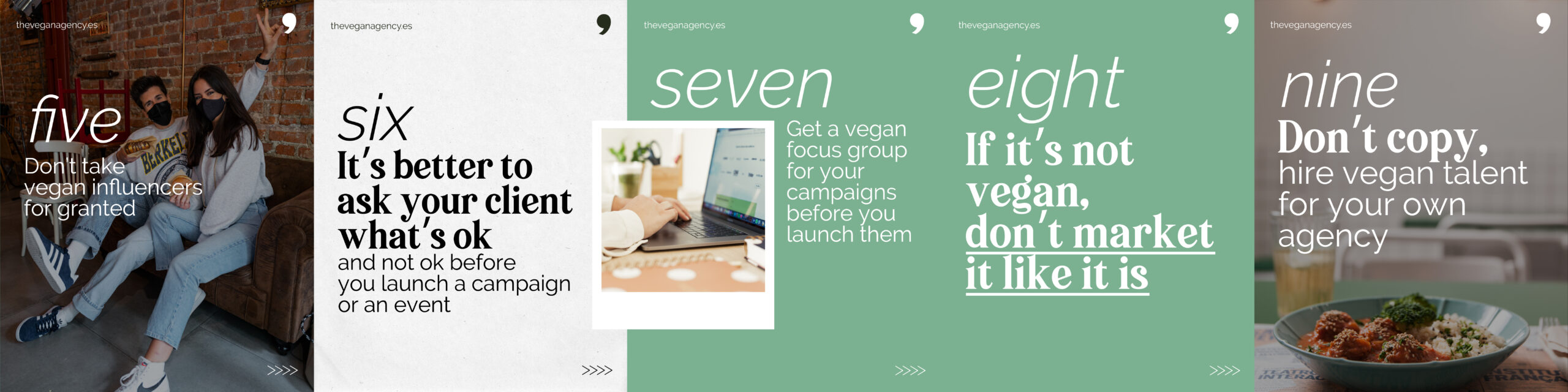
Like all influencers, vegans probably started sharing stuff for free, collaborating with small brands, creating their brand, and building their audience. If they are a good fit for your brand, as an ambassador, featuring your product, or running a competition, it’s easy to feel like they’ll do it out of the goodness of their vegan heart. Although that’s probably true, vegan food, vegan rent, and vegan bills aren’t free either, so it’s important not to take advantage of the activist side of veganism so that you can sneak your product into people’s social channels.
6. Ask your vegan client
When in doubt, always ask. Before launching a campaign, definitely run it by your clients. They will know if it passes the vegan offence filter or not. There are all sorts of ways to accidentally make a campaign that’s not particularly sensitive to vegans and a vegan lifestyle.
On the other hand, publicity can often be ‘too vegan’ and end up putting people off or even being traumatising to the public. Veganism and animal rights are intrinsically linked, but plastering animal rights imagery or slogans on your products or throughout campaigns is sometimes not ideal. Likewise, marketing something that seems overly natural, healthy, green, sustainable and marvellous also tends to freak people out.
Campaigns that draw comparisons between humans and animals are also a minefield since trying to imply that humans and animals are the same can seem contrived, but clearly placing humans in a different league than the other animals is also a no-no.Keep the core values of the company in mind when designing campaigns, events and marketing materials.
7. Try a vegan focus group
If you want to triple-check your campaigns before you launch them, try getting a focus group together. Vegans are highly attuned to anything that goes against their beliefs, so will easily spot potential issues in any campaign, this is especially important if you are a non-vegan agency.
The good thing is that avoiding offending vegans is unlikely to end up offending anyone else (except maybe the meat or dairy lobbyists), so tweaking a campaign to make it vegan-friendly won’t have any negative effects. And, hey, if the meat-eaters take issue with your campaign, it’s all wood to your publicity fire!
8. If it’s not vegan, don’t market it like it is
Marketing vegan products well is a challenge, but not insurmountable and it often gives you an easy ‘in’ especially with the sector experiencing so much growth. However, being a sneaky sneak and marketing a product that isn’t vegan like it is will get you in trouble. Slapping “plant-based” and “vegan” and “cruelty-free” on your products is a great way to get extra credit and buzz, but it has to be true.
Someone will find out if it isn’t.
Burger King’s vegan whopper with egg-mayo or Pans & Company’s vegan sandwich with inexplicable fish oil in the bread could be explained away as simple (idiotic) mistakes. However, there is an astonishing number of cases of companies using “plant-based,” “vegan,” or “cruelty-free” on products and websites when in fact their catalogue includes all sorts of animal derivatives. Some are subtle and hidden, others are as blatant as stuff made of wool and beeswax.
There is also an alarming trend of adding vegan and cruelty-free logos to things that are neither vegan nor cruelty-free. Some of these logos are simply stolen from the internet, brazenly infringing copyrights and advertising standards and so forth, but others are more subtle remakes of the standard logos that are similar enough to fool but not technically stolen.
There have even been cases of stock photos of meat being ‘appropriated’ and then used to market vegan products. Sometimes without even bothering to photoshop them a bit first.
Don’t do this. Even if people don’t technically care if the product has beeswax or non-vegan linalool, they will care that you sold them something under false pretences.

9. Don’t just copy other vegans
Through all markets, there is a hefty amount of ripping off. In general, slogans sound similar, and logos look alike, but the messages are at best diluted, and at worst lost in the spaces between brands as customers struggle to remember who is who.
Now that social media is queen, and everybody is popping their thoughts and ideas all over the internet, one might be excused for accidentally writing something that sounds very much like something seen on Instagram a month ago, or having a great idea for a graphic that someone else has already done.
The line is fine. There is a difference between drawing inspiration and just copying. It isn’t always clear where it is, but you can usually tell if you see the original and the copy, especially if the original is well made. Changing a couple of words, the font, or the colours doesn’t make it new work. If you have found a creative person or company that is making work that you think would pair well with a brand you represent, hire those people!
Here’s why we set up a communication agency in the first place, if you want to read more about it.

10. Bonus tip: vegans are not your target
Vegans are still a small group inside the far larger “flexitarian” population. They are used to working harder to find new food and different options to include in their diet.
“Don’t worry about the vegans, they will find you,” says Heather Mills (vbites founder).
This is absolutely true; the big market to conquer is the flexitarian consumer base. The people who want to eat less meat, not no meat. They want to eat more healthily, more sustainably, and for the same price.
Vegans, for the most part, are the deciding factor as to whether your product is well-received or not. All the ‘normal’ people are paying much less attention to vegan foods and other products, so if it’s a big hit, the vegans will sell it for you. The reverse is also true, if the product is sub-par or claims to be something it isn’t, vegans will come down on it like a tonne of bricks.
Now, let us know what you think in the comments. Do you work with a PR and marketing agency specialised in veganism or not? Which one of these tips would you say is the most important? Do you have any more tips? We’ll read and respond your comments, thanks for reading! If you want to work with us, you can find more info about our vegan agency here.
All of these photos and graphics are our © so, please, drop us an email to Tom@theveganagency.es if you’d like to use them.
Photo 1: Zaraida Fernández, chef and part of the Väcka team now
Photo 2: Vegans at Vegana Gal fair in Galicia, the biggest in Europe
Photo 3: Vegan catering for Tamara Ginés of Cítrica Eventos at Espacio Margarete
Photo 4: Agnès Teixidó, Beauty Editor of GLAMOUR Magazine Spain
Photo 5: Influencers George Gorg, Jenny Rodriguez and Cristian of La Pasta No Engorda at Malila Coffee in Valencia
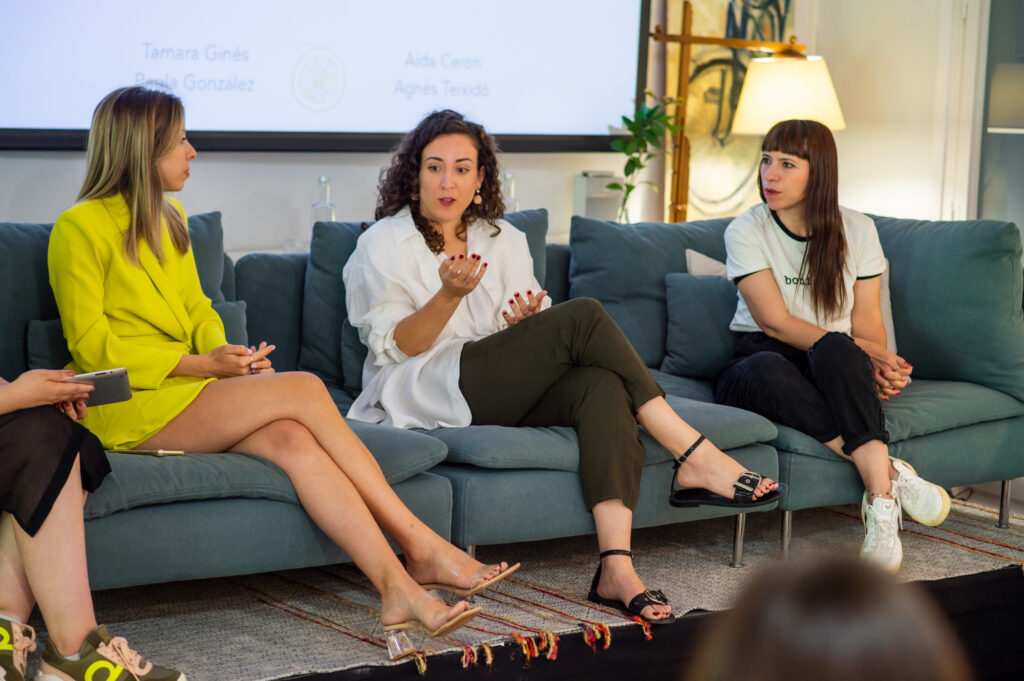
Photo 6: Angès Teixidó, Tamara Ginés and Aída Cerón at Margarete in Madrid
Photo 7: Man walks on the Vegana Gal looking at the vegan products
Photo 8: Making coffee at Vegana Gal fair